Happy Baby Dolphin: A Designer’s Stitch Review
When evaluating a new machine embroidery design for professional or commercial use, the first question is never just "is it cute?" The real question is whether the artwork translates effectively into thread. As a designer who regularly reviews digital assets for craft businesses and Etsy sellers, I approached the Happy Baby Dolphin design with a critical eye toward production viability. This review focuses on how this specific piece of ocean-inspired art performs when moved from screen to fabric, specifically within the competitive Baby Animals category.
First Impressions and Visual Translation
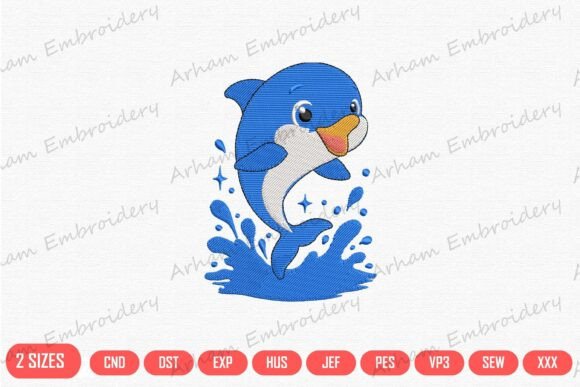
The initial appeal of Happy Baby Dolphin lies in its dynamic composition. The artwork features a cheerful dolphin leaping from sparkling ocean waves, capturing a sense of motion that can be tricky to replicate in embroidery. From a digitizing perspective, the success of this design depends entirely on how those "sparkling waves" are interpreted. If they are rendered as dense satin stitch columns, the design risks becoming stiff and bulletproof. However, if the water elements utilize running stitch or lighter fill stitch textures, the design maintains the drape necessary for wearable items.
Visually, the mood is undeniably joyful, making it an immediate candidate for nursery decor and personalized gifts. The shape of the dolphin creates a natural focal point, but as a reviewer, I am looking at the negative space. Does the design breathe? For a handmade product to look professional rather than homemade, there must be adequate spacing between the marine life and the wave details to prevent puckering on lighter fabrics. The visual personality here suggests versatility; it is playful enough for a toddler’s sweatshirt embroidery yet refined enough for a boutique baby blanket if stitched with high-quality sheen threads.
Real-World Application: The Custom Tote Bag Test
To truly judge this embroidery file, I mentally placed it in a specific production scenario: creating a custom beach tote bag for a summer capsule collection. Tote bags present unique challenges because canvas fabric texture can swallow fine details, and the item requires durability.
In this context, Happy Baby Dolphin serves as an excellent center chest or lower-corner placement. For a tote bag design, I would prioritize checking the stitch density of the wave section. Canvas demands a slightly higher density than jersey knit, but not so much that the needle perforates the fabric excessively. If the dolphin’s outline uses a clean satin stitch border, it will pop beautifully against natural cotton canvas. However, if the internal shading relies on complex color blending, I would advise simplifying the thread colors for production efficiency. Small shop products need to balance aesthetic beauty with profit margins; a design requiring twelve thread changes for a $25 tote bag is less viable than one achieving the same impact with six colors.
This scenario also highlights the importance of stabilizer choice. For a structured tote, a cutaway stabilizer is non-negotiable to support the leap of the dolphin and prevent the waves from distorting the bag's shape during washing. Seeing this design on a finished product like a tote confirms its value as a commercial embroidery asset that bridges the gap between novelty and staple merchandise.
Navigating Fabric Limitations and Hoop Sizes
While Happy Baby Dolphin shines on stable woven fabrics, caution is required when applying it to stretchy or textured materials. When planning baby embroidery on ribbed onesies or performance wear, the "sparkling" elements of the waves become potential failure points. Stretch fabrics move, and rigid stitch patterns do not. If you intend to use this design on apparel decorators' staples like bamboo rayon or modal blends, you must verify that the underlay is sufficient to anchor the design without adding bulk.
Hoop size compatibility is another practical consideration. Before purchasing or downloading this digital embroidery file, confirm the dimensions against your available hoops. A design that fits perfectly in a 5x7 hoop might lose critical wave details if resized down to a 4x4 hoop for a bib or cap. Resizing embroidery files often alters stitch density and pull compensation. If the Happy Baby Dolphin design includes tiny text or intricate fin details, reducing it below 60% of its original size could result in lost definition or thread breaks.
Furthermore, consider the surface curvature. Caps and curved brim hats require designs that are horizontally oriented and free of tall vertical elements. While a leaping dolphin is inherently vertical, assess whether the layout can be rotated or if the wave base provides enough horizontal stability for cap framing. If the design is too tall, it may distort around the crown seam, compromising the professional finish your customers expect.
Enhancing Product Value and Customer Trust
For Etsy sellers and creative entrepreneurs, the perceived value of a finished product is directly tied to stitch quality. Happy Baby Dolphin has the potential to elevate brand consistency because of its recognizable silhouette. Customers associate clean, well-digitized animal motifs with high-quality craftsmanship. When this design is executed correctly, it signals attention to detail.
However, visual appeal extends beyond the physical item. In the digital marketplace, printable mockups are essential. Because this design features high-contrast elements (the dolphin against the waves), it photographs exceptionally well. This clarity translates to better engagement in social media feeds and listing thumbnails. When using this design for commercial embroidery listings, ensure your photography captures the texture of the stitches. Buyers want to see the sheen of the thread and the dimensionality of the leap, not just a flat digital rendering. This transparency builds buyer confidence and reduces return rates due to unmet expectations.
Critical Designer Notes for Production Success
Before adding Happy Baby Dolphin to your permanent library of design assets, adhere to these practical protocols to ensure safety and quality:
- Test on Scrap Fabric First: Never run a new embroidery project on final goods without a test sew-out. Use a fabric weight similar to your intended product to check for registration issues between the dolphin body and the wave accents.
- Verify Licensing Terms: Always confirm whether the license allows for commercial embroidery of finished products versus selling the digital file itself. Protecting your craft business means respecting intellectual property boundaries.
- Check Thread Color Contrast: Review the palette against both light and dark backgrounds. A design that looks vibrant on white may disappear on navy blue unless the digitizer included adequate contrast outlines or background fills.
- Inspect Small Details: Zoom in on the embroidery file in your software. Ensure that small elements like eyes or water droplets are large enough to stitch out clearly and are not merely decorative pixels that will turn into thread nests.
- Evaluate Washability: If creating items for babies or kitchen use, test the design’s durability. Run the sample through a wash cycle to ensure the satin stitches hold up and the fill areas do not gap or fray.
- Mockup Versatility: Create black and white versions of your mockups to test how the design reads without color. Strong designs rely on value and form, not just hue.
Final Verdict for Makers and Sellers
Happy Baby Dolphin represents a strong contender for anyone specializing in nautical themes, nursery goods, or summer apparel. Its success as a profitable embroidery project hinges on understanding its technical requirements regarding density, fabric pairing, and sizing. By treating this design as a component of a larger production workflow rather than just a standalone image, makers can leverage its charm to create durable, sellable, and professionally finished goods. Whether you are stitching a personalized gift for a client or stocking your shop with holiday embroidery inventory, this design offers the right balance of whimsy and structural integrity when handled with expert care.